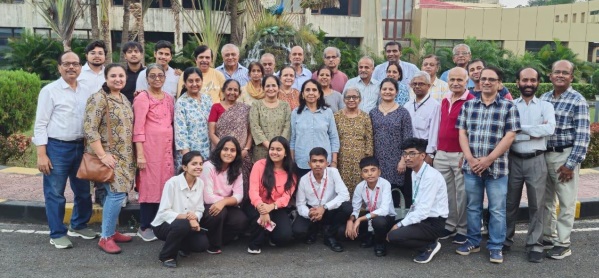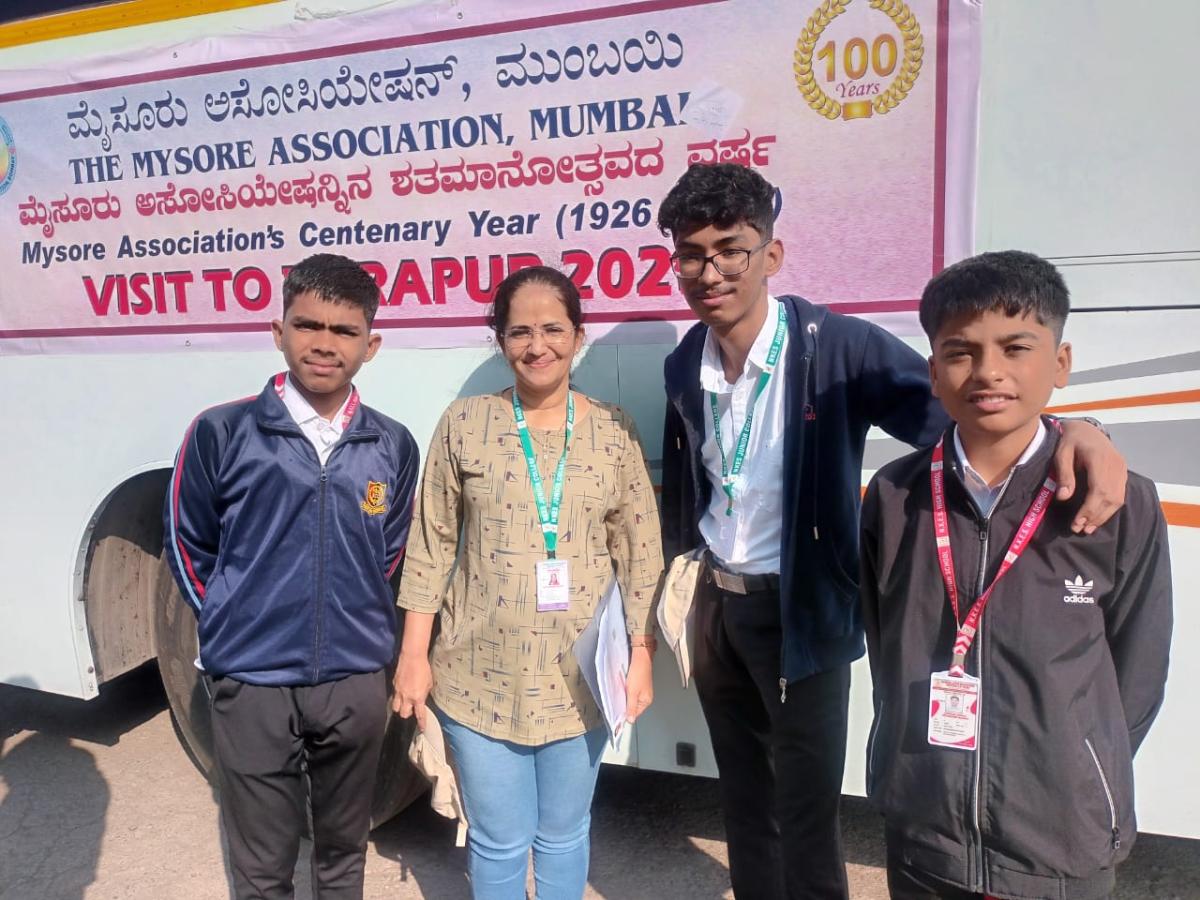

An educational visit to the Tarapure Atomic Power Station (TAPS) was organised for few students of Std. 10 and Std. 11th on Saturday 15th November 2025. As their accompanying teacher, it was a privilege to guide them through this unique scientific experience. The oneday trip, organised by Mysore Association, felt truly meaningful, especially because we spent an entire day learning, exploring, and observing without the distraction of mobile phones or cameras. We left early morning and reached Tarapure around 10 a.m. where, after the security procedures, we entered the premises of TAPS. Officials from NPCIL welcomed us warmly and provided light refreshments. The learning session began with an interactive talk by Dr.
A. K. Pandey, who explained in simple terms the working of Boiling Water Reactors (BWR), Pressurised Heavy Water Reactors (PHWR), the use of Uranium-235, nuclear waste management, and the multi-layered safety systems that protect both workers and the environment. TAPS 1 & 2—Asia’s first commercial nuclear reactors started in 1969 with U.S. collaboration and TAPS 3 & 4 which are indigenously built PHWR units were explained in detail. Students were fascinated to learn how these plants generate enormous amounts of electricity through controlled nuclear reactions. A major highlight was the visit to the control room, the heart of the entire plant. The calmness, discipline, and sincerity of the staff in uniform were remarkable. Despite the complexity of countless panels, screens, and monitoring systems, the environment remained extremely peaceful and highly organised. Staff members worked with precision, following clear procedures, continuously monitoring safety parameters. The students also learned how TAPS has successfully responded to every emergency through rapid action, technology, and strong training.
We then visited the turbine hall, reactor building, and later the beautiful TAPS residential colony, where we were served tea and snacks. The entire experience—from scientific explanations to the hospitality—was enriching and memorable for all of us. This visit not only increased the students’ understanding of nuclear science but also revived the joy of learning beyond textbooks. We extend our heartfelt thanks to Mrs. Nitina Shukla, Principal Madam ,Mr. Joshi Sir, Mr. Navlekar Sir, and the organising team of Mysore Association, as well as the dedicated staff of NPCIL, for making this informative and inspiring visit possible.